
Have you ever noticed that some weeks you feel incredibly energetic, focused, and motivated, and other weeks you crave chocolate, suffer from bloating, and can barely contain yourself? It’s not just a “sign of being a woman.” It’s your hormonal activity, and your menstrual cycle diet may be the key to listening to those hormones.
For decades, conventional nutrition has largely ignored the complex and ever-changing hormonal landscape of the female body. It is from this biological reality that the concept of ‘cycle syncing’ was born. According to the Office on Women’s Health, your menstrual cycle is much more than just menstruation. It is a complex hormonal rhythm that lasts for about 28 days and affects your metabolism, energy levels, mood, appetite, sleep quality, and even your immune system. When you align your diet with your hormonal activity at each stage, everything begins to feel more manageable.
In this detailed guide, we’ll walk you through exactly what to eat (and what to limit) during each phase, so you can feel your best all month long.
Key Takeaways
- Your menstrual cycle diet should change across all four phases — menstrual, follicular, ovulatory, and luteal — to match your body’s shifting hormonal needs.
- Iron-rich and anti-inflammatory foods are critical during menstruation to replenish what’s lost and ease cramping.
- The follicular phase calls for light, energizing foods that support rising estrogen naturally.
- Ovulation is the best time to focus on antioxidant-rich, fiber-forward meals that support liver detoxification of excess estrogen.
- During the luteal phase, complex carbohydrates and magnesium-rich foods can significantly reduce PMS symptoms.
- Staying consistently hydrated and limiting alcohol and processed foods throughout the entire cycle benefits hormonal health.
- Cycle syncing your menstrual cycle diet is a science-backed strategy, not a fad — it can improve energy, fertility, and mood over time.
Understanding the Endocrine and Digestive Connection
Before discussing the specific foods for each phase in detail, it is important to understand the cellular and chemical processes involved. The female body operates according to an infradian rhythm, which is a biological cycle that lasts for more than 24 hours. During this cycle, your endocrine and digestive systems work in concert.
When estrogen levels are at their highest, your insulin sensitivity is high, which means your cells become very efficient at using carbohydrates for energy through cellular respiration. On the other hand, when progesterone levels rise in the second half of your cycle, insulin sensitivity decreases and your basal metabolic rate increases. This means that your body needs more calories, but it prefers complex and slow-release energy sources to prevent sudden spikes in blood glucose levels.
Additionally, the estrobolome (a special type of bacteria in the gut microbiome) is responsible for metabolizing and excreting excess estrogen. If your menstrual cycle diet is lacking in dietary fiber (such as arabinose and other prebiotics), estrogen can be reabsorbed into the bloodstream, leading to estrogen overload and severe PMS. Therefore, maintaining good digestive health is essential for managing your menstrual cycle.
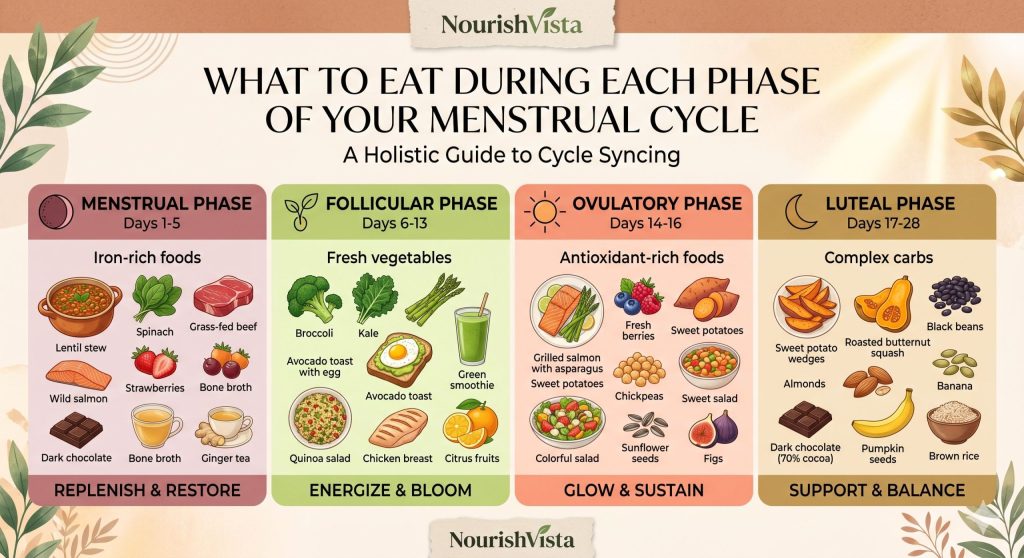
Menstrual Phase: Replenish & Restore
📅 Days 1–5 | When your period begins
The menstrual phase marks the beginning of your menstrual cycle. Estrogen and progesterone levels are at their lowest during this time. This sudden drop in hormones can leave you feeling tired, withdrawn, and physically exhausted. Bleeding also significantly depletes your body of iron and zinc. At the same time, your body releases prostaglandins, which are hormone-like compounds that cause your uterus to contract, often resulting in painful cramps and inflammation throughout your body.
Your diet’s main goal:
Your menstrual cycle diet should prioritize mineral, blood-building, and anti-inflammatory nutrients. The goal is to replace lost iron with warm, easily digestible foods that soothe the gut.
What to eat
- Iron-rich proteins: Grass-fed beef, liver, and organic eggs are all highly available sources of heme iron. As plant-based alternatives, lentils, kidney beans, and dark green vegetables are great.
- Vitamin C boosters: Citrus fruits, strawberries, capsicum, and broccoli.
- Anti-inflammatory fats: Omega-3 fatty acids inhibit the production of inflammatory prostaglandins. Focus on ocean salmon, sardines, walnuts, chia seeds, and flax seeds.
- Soothing minerals: Magnesium helps relax the smooth muscles of the uterus. Include dark chocolate (with at least 70% cocoa), pumpkin seeds, and almonds in your diet.
- Warm foods: Root vegetable stews, bone broth, and herbal teas (such as ginger and red raspberry leaf) are very comforting for the digestive system during this sensitive time.
Limit During This Phase:
Avoid highly processed seed oils, alcohol, salty processed foods, refined sugar, and heavy dairy products can cause more prostaglandin release and increase stomach pain.
Follicular Phase: Energize & Bloom
📅 Days 6–13 | Between your period and ovulation
Once your period ends, your body enters the follicular phase. Estrogen levels begin to rise, and your energy, mood, and mental clarity naturally improve. Most women feel their best during this time. Your menstrual cycle diet should support and enhance that natural vitality during this phase. Your body is most efficient at metabolizing complex carbohydrates during this time.
Your diet’s main goal:
Your menstrual cycle diet should now shift toward supporting healthy estrogen production and metabolism. If estrogen doesn’t get metabolized properly by the liver and gut, it can cause hormonal imbalances later in the month.
What to eat:
Cruciferous vegetables: Broccoli, cauliflower, Brussels sprouts, and kale contain compounds called diindolylmethane (DIM) and indole-3-carbinol, which help the liver break down excess estrogen.
Fermented foods and prebiotics: To support your gut flora, eat plenty of probiotic-rich foods like kimchi, raw sauerkraut, kefir, and kombucha.
Lean, high-quality protein: Chicken breast, turkey, tofu, and white fish provide essential amino acids to build the uterine lining and help with muscle recovery.
Complex carbohydrates: Because insulin sensitivity is high, your body uses carbohydrates efficiently for energy. Focus on quinoa, oats, buckwheat, and colorful fruits to support your active lifestyle.
Limit During This Phase:
Heavily processed foods, Excess red meat, and high-sugar snacks.
Ovulatory Phase: Glow & Sustain
📅 Days 14–16 | Peak fertility window
After ovulation, the ruptured follicle transforms into the corpus luteum, which is a temporary endocrine gland that produces large amounts of progesterone. Progesterone is a “calming” hormone, but it also raises your core body temperature and increases your basal metabolic rate, which means you can burn an extra 100 to 300 calories per day.
As this phase progresses, if the egg is not fertilized, both estrogen and progesterone levels drop dramatically, which causes PMS symptoms (mood swings, intense cravings, bloating) and a drop in serotonin levels. Insulin sensitivity also drops rapidly.
Your diet’s main goal:
This is the most important time of your menstrual cycle to follow your diet. Its main goals are to keep blood sugar levels stable, increase serotonin production, and prevent water retention. Since insulin sensitivity is low, a rapid rise in blood glucose can cause a serious crash, which can lead to mood swings and fatigue.
What to eat:
Complex, slow-release carbohydrates: Instead of simple sugars and refined grains, eat complex carbohydrates that release glucose slowly into the blood. Sweet potatoes, butternut squash, brown rice, and chickpeas are good choices.
B-vitamins: B6 is crucial for progesterone production and neurotransmitter function. Include turkey, bananas, chickpeas, and grass-fed beef in your diet.
Magnesium-rich foods: Get plenty of magnesium to combat the impending hormonal imbalance that can cause headaches and stomachaches. Swiss chard, black beans, avocado, and raw cacao are essential.
Natural diuretics: To combat progesterone-induced flatulence, eat foods high in water and potassium, such as cucumbers, celery, watermelon, and dandelion root tea.
Universal Menstrual Cycle Diet Principles to Follow All Month
While each phase has its specific needs, a strong foundation of menstrual cycle diet habits applies throughout your entire cycle. These non-negotiable habits support hormone production, gut health, and metabolic balance regardless of what day you’re on, making them an excellent baseline to establish, especially if you are also exploring a balanced diet for women over 30.
🌿 All-Month Nutrition Habits
- Drink at least 8–10 glasses of water daily — hydration directly affects hormone transport and energy.
- Prioritize fiber (25–35g/day) from vegetables, legumes, and whole grains to support healthy estrogen clearance.
- Eat enough protein at every meal — amino acids are the literal building blocks of hormones.
- Include omega-3 fatty acids (from salmon, walnuts, chia seeds, or flaxseed) every day to reduce systemic inflammation.
- Avoid skipping meals — blood sugar instability disrupts cortisol and downstream sex hormones.
- Minimize ultra-processed foods and refined sugars — they promote insulin resistance, which throws off your entire hormonal cascade.
- Consider tracking your cycle and symptoms alongside your meals to identify personal patterns.
The beauty of a thoughtful menstrual cycle diet is that it doesn’t require perfection — it simply requires awareness. Even small, consistent shifts in what you eat around your cycle can produce noticeable changes in energy, mood, and period symptoms within two to three months.
Should You Take Supplements to Support Your Menstrual Cycle Diet?
While a food-first approach is always ideal, certain supplements can meaningfully complement your menstrual cycle diet — especially if you have dietary restrictions or struggle with severe PMS symptoms.
Magnesium glycinate (300–400mg/day) is one of the most well-researched supplements for PMS relief, reducing cramping, mood swings, and bloating when taken consistently in the luteal phase. Vitamin D is important for immune regulation and mood stabilization, particularly in the winter months. Iron supplementation should only be taken under medical guidance — excess iron can be harmful. Evening primrose oil is popular for breast tenderness during the luteal phase and shows some clinical promise.
Always speak with a registered dietitian or healthcare provider before adding supplements to your menstrual cycle diet routine, especially if you have underlying health conditions or are on medication.
Frequently Asked Questions
Question 1: What is a menstrual cycle diet, and how does it work?
Answer: A menstrual cycle diet, also known as cycle syncing, is a nutritional approach that aligns your food choices with the hormonal changes that occur throughout the four phases of your menstrual cycle—menstrual, follicular, ovulatory, and luteal. Since estrogen, progesterone, and testosterone levels fluctuate significantly throughout the month, your nutritional needs change accordingly. By eating foods that support the key hormones and physical needs of each phase, you can increase energy, reduce PMS, and maintain overall hormonal balance.
Question 2: How long does it take to see results from a menstrual cycle diet?
Answer: Most women begin to notice significant changes, such as reduced bloating, improved mood, reduced food cravings, and increased energy, after following a cycle-informed menstrual cycle diet consistently for two to three full cycles. Hormonal changes occur gradually, so patience and consistency are essential.
Question 3: Can a menstrual cycle diet help with PCOS or endometriosis?
Answer: Yes, a well-structured menstrual cycle diet can be a supportive, complementary tool for conditions like PCOS (Polycystic Ovary Syndrome) and endometriosis, both of which involve hormonal imbalance and inflammation. Anti-inflammatory foods, low-glycemic carbohydrates, and adequate fiber are particularly beneficial.
Question 4: What foods should I avoid completely for hormonal health?
Answer: While there is no need to permanently ban any specific foods, a healthy menstrual cycle diet typically involves reducing highly processed foods, refined sugars, excess alcohol, and foods containing artificial hormones or xenoestrogens (such as certain plastics and conventional non-organic dairy products).
Question 5: Is cycle syncing scientific?
Answer: The basic principles of the menstrual cycle diet are based on well-established endocrinology and nutritional science. Hormonal fluctuations throughout the cycle have been thoroughly documented, and the role of specific nutrients (such as magnesium for PMS, iron for bleeding, and omega-3s for inflammation) is strongly supported by clinical evidence.
Question 6: Can I follow a menstrual cycle diet if I use hormonal birth control?
Answer: Hormonal birth control methods suppress your natural cycle phases, which means that the traditional four-phase approach to a menstrual cycle-based diet may not apply in the same way. However, general principles (such as eating nutritious foods, prioritizing iron and magnesium, reducing inflammation, and maintaining good gut health) are beneficial for everyone, regardless of contraceptive use.

One Response
Nice content