
Entering your 30s is a transformative stage. During this time, your metabolism gradually changes, hormonal rhythms develop, and muscle mass naturally begins to decline. Because of these physiological changes, a balanced diet for women over 30 is extremely important. Not only is it vital for weight control, but it is also essential for sustainable energy, radiant skin, strong bones, and long-term metabolic, hormonal, and bone heal
In this post, we’ll explore why a balanced diet for women over 30 is important, including key nutrients to prioritize, sample meal plans, and easy recipes. Backed by science from organizations like the World Health Organization (WHO) and Harvard T.H. Chan School of Public Health, you’ll walk away with actionable tips for changing your eating habits. Ready to feel vibrant and empowered? Let’s get started.
Why a Balanced Diet Matters More After 30
Women go through some significant body changes when they turn 30. Estrogen levels begin to fluctuate, which can lead to weight gain, bone loss, and mood swings. According to the National Institutes of Health (NIH), women over 30 need about 200 fewer calories per day than they did in their 20s because their metabolism slows by 2-8% per decade. Ignoring this can lead to fatigue, brittle hair, or an increased risk of osteoporosis and heart disease.
A balanced diet for women over 30 helps prevent these changes by providing:
Sustainable energy: Complex carbohydrates and protein help stabilize blood sugar, preventing blood sugar crashes.
Hormone support: Healthy fats and fiber help balance estrogen in the body.
Muscle and bone health: Protein and calcium maintain strength.
Weight management: Nutritious foods increase satiety without adding extra calories and help maintain weight.
A study in the Journal of the Academy of Nutrition and Dietetics found that women who eat a balanced diet lose 10-15% more body fat than those who eat a restricted diet. It’s not about dieting—it’s about nourishing your body over time.
Key Nutritional Needs for Women Over 30
Your plate should have a variety of foods. Here’s a breakdown of daily goals (adjusted for activity level) for women ages 31-50, according to USDA guidelines.
Macronutrients: The Foundation
Protein (46 grams/day): Builds muscle, repairs tissue, and supports metabolism. Aim for 20-30 grams per meal.
Carbohydrates (130 grams/day, mostly complex): Fuel daily activities without a sugar spike.
Fats (20-35% of calories): Support hormones; prioritize unsaturated types.
Micronutrients: The Power Players
Women over 30 often lack these key nutrients:
Calcium (1,000mg): Crucial for bone health (osteoporosis risk rises post-30). Top Sources: Dairy, leafy greens, fortified almond milk.
Iron (18mg): Important for energy and red blood cell production. Top Sources: Lean meats, spinach, lentils.
Vitamin D (600 IU): Aids in calcium absorption and immunity. Top Sources: Sunlight, fatty fish, eggs.
Folate (400mcg): Vital for cell repair and fertility support. Top Sources: Beans, avocados, citrus.
Omega-3s (1.1g): Promotes heart health and mood stabilization. Top Sources: Salmon, walnuts, flaxseeds.
Magnesium (320mg): Helps with stress reduction and sleep. Top Sources: Nuts, seeds, dark chocolate.
Pro tip: Pair iron-rich foods with vitamin C (e.g., a spinach salad with bell peppers) for better absorption.
Building Your Balanced Plate: The 50/25/25 Rule
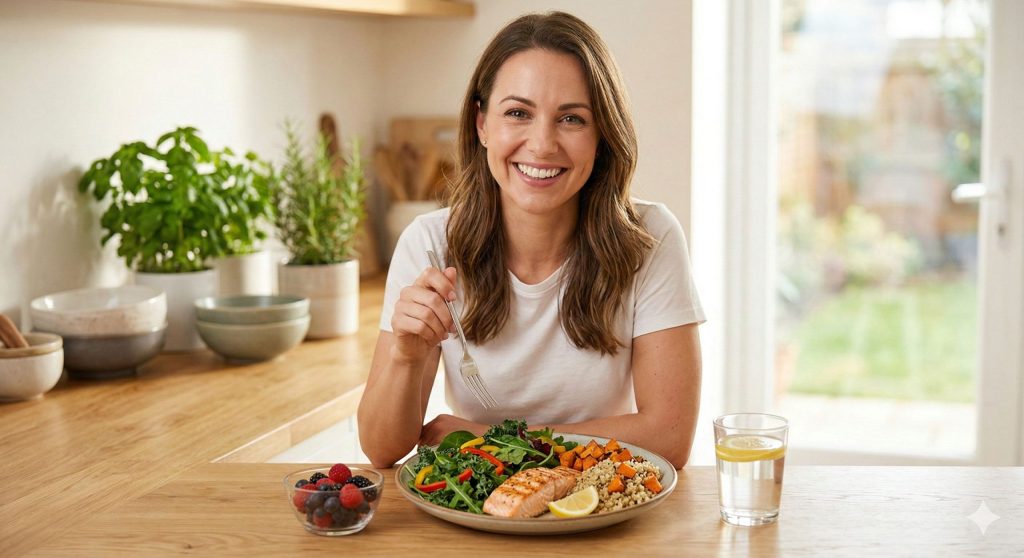
The 50/25/25 rule is a simple plate method where about half of your plate comes from non-starchy vegetables, a quarter from lean protein, and a quarter from complex carbohydrates, often with a small amount of healthy fat added. This balanced diet for women over 30 should also include plenty of fiber (aim for 25 grams per day) to support digestion and fullness.
50% Non-Starchy Vegetables: Think leafy greens, broccoli, cauliflower, bell peppers, carrots, and zucchini. These foods are low in calories but rich in fiber, vitamins, and minerals, which help with fullness and digestive health.
25% Lean Proteins: Options like chicken, turkey, fish, eggs, Greek yogurt, cottage cheese, tofu, tempeh, beans, or lentils help with muscle repair, hormone production, and increased satiety.
25% Complex Carbohydrates: Foods such as brown rice, quinoa, oats, whole grain bread, and sweet potatoes provide steady energy and help regulate blood sugar.
Pro Tips: Add a little healthy fat (like olive oil, avocado, or nuts) to balance hormones and absorb fat-soluble vitamins. Hydrate well (water needs vary, but aim for a baseline of around 2.7 liters per day, more if active). Limit added sugar to <25 grams and sodium to 2,300 milligrams.
Sample 7-Day Meal Plan for a Balanced Diet for Women Over 30
Here’s a sample 1,800-calorie diet plan. Each day includes breakfast, lunch, dinner, and two snacks. Focus on whole foods and consider prepping some ingredients on Sunday to set yourself up for success!
Day 1: Energizing Start (1,800 kcal)
Breakfast (300 kcal): Greek yogurt parfait (1 cup yogurt, berries, chia seeds)
Snack 1 (200 kcal): Apple with 1 tablespoon of almond butter
Lunch (450 kcal): Grilled chicken salad (mixed greens, tomatoes, quinoa, feta)
Snack 2 (150 kcal): Carrot sticks with hummus
Dinner (700 kcal): Baked salmon (4 oz), sweet potato, steamed broccoli
Day 2: Fiber Focus (1,800 kcal)
Breakfast (350 kcal): Overnight oats (oats, milk, banana, walnuts)
Snack 1 (180 kcal): Handful of mixed nuts
Lunch (400 kcal): Lentil soup with whole-grain bread and a side salad
Snack 2 (150 kcal): Cottage cheese with cucumber
Dinner (720 kcal): Turkey stir-fry with bell peppers and brown rice
Day 3: Plant-Powered (1,800 kcal)
Breakfast (320 kcal): Smoothie (spinach, banana, protein powder, almond milk)
Snack 1 (190 kcal): Pear and string cheese
Lunch (430 kcal): Chickpea wrap (whole-wheat tortilla, veggies, tahini)
Snack 2 (160 kcal): Yogurt with flaxseeds
Dinner (700 kcal): Veggie-packed tofu stir-fry with quinoa
Days 4-7 Variations
Day 4: Swap salmon for eggs; add avocado.
Day 5: Focus on iron—spinach omelet for breakfast, beef stir-fry for dinner.
Day 6: Seafood night—shrimp tacos on corn tortillas.
Day 7: Recovery day—oats for breakfast, veggie burger for dinner.
Track your progress by noting your energy levels and measuring your weight weekly. Consult a doctor or dietitian for personalization, especially if you have specific dietary needs like vegetarianism.
Ideal Macronutrient Distribution
A general structure for a balanced diet for women over 30 involves this plate breakdown:
Protein: 30%
Complex carbohydrates: 35–40%
Healthy fats: 25–30%
This ratio, along with 25-30g of daily fiber, helps maintain insulin sensitivity and stable energy levels.
Foods to Limit After 30
A proper, balanced diet for women over 30 also means reducing the intake of foods that promote inflammation and insulin resistance. Try to limit:
Refined sugars & carbs: Pastries, candy, white bread.
Sugary drinks: Carbonated soda, sweetened coffees.
Heavily processed foods: Processed meats, packaged snacks.
Fried foods and excess alcohol.
Common Myths About a Balanced Diet for Women Over 30
Myth 1: Carbohydrates are the enemy. * Fact: Whole grains like oats, quinoa, and brown rice stabilize blood sugar and hormones. They are key to weight management and energy. Studies have shown they reduce the risk of diabetes by 20-30% compared to refined carbohydrates.
Myth 2: You only need low-calorie foods. * Fact: Focus on nutrient density rather than endless calorie counting. Vegetables, nuts, and lean protein fill you up with vitamins and fiber. A 2023 meta-analysis in The Lancet found that nutritious foods outperform low-calorie foods for long-term weight loss.
Myth 3: Supplements replace meals. * Fact: Whole foods are better absorbed. For example, spinach provides iron and vitamin C, increasing iron absorption by 2x versus pills (according to NIH data). Supplements can help fill in gaps, but they are not a substitute for real food. Developing a whole-food habit is the key to maintaining a balanced diet for women over 30.
Myth 4: Detox juices work wonders. * Fact: Your liver and kidneys naturally detoxify your body. Supporting them with a balanced diet rich in antioxidants (berries, vegetables, garlic) is much more effective. The Mayo Clinic confirms that detox juices offer no benefits over the body’s natural processes.
Lifestyle Tips to Amplify Your Balanced Diet
Food is 80% of the equation, but your habits play a massive role in how you feel!
Exercise: Aim for 150 minutes of moderate cardio plus strength training (e.g., yoga, weight lifting) per week to increase metabolism and maintain muscle mass.
Sleep: Get 7-9 hours; less sleep increases cortisol, which can impair weight management.
Stress Management: Practices like meditation help keep stress levels in check.
Portion Control: Use your hands as a guide! A palm-sized portion for protein, and a fist-sized portion for vegetables.
Track and Adjust: Consider using a nutrition app to monitor your intake.
Potential Challenges and Solutions
Busy Schedule? Meal prep in batches and utilize frozen vegetables to save time.
Cravings? Swap sugary sweets for fruit and nuts.
Dining Out? Choose grilled proteins, salads, and opt for half portions or take leftovers home.
Hitting a Plateau? Recalculate your caloric needs every 3 months.
Long-Term Benefits of a Balanced Diet for Women Over 30
Committing to a balanced diet for women over 30—one rich in fruits, vegetables, lean proteins, and healthy fats—improves health throughout life, combats hormonal changes, and mitigates the risks of aging. Supported by long-term research, the key benefits include:
Hormonal Balance: A nutritious diet helps regulate estrogen fluctuations during perimenopause, reducing mood swings and stress. Phytoestrogens from soy, flaxseed, and pulses naturally support this.
Bone Health: Calcium, vitamin D, and magnesium from dairy, greens, and fortified foods protect bone density, significantly reducing the risk of osteoporosis after menopause.
Heart Protection: A balanced diet for women over 30 that is rich in fiber, omega-3s, and low-sodium foods lowers cholesterol and blood pressure, reducing cardiovascular risk as estrogen levels drop. The Mediterranean-style diet shines here!
Cognitive Age: A diet rich in antioxidants from middle age onwards can help slow the progression of cognitive decline, reduce inflammation, and improve blood flow to the brain.
Weight and Energy Stability: A balanced diet for women over 30 helps prevent middle-aged weight gain, increases sustained energy through complex carbohydrates and protein, and improves skin radiance.
Frequently Asked Questions (FAQ)
Q: Why does a balanced diet matter more after I turn 30?
A: When you hit your 30s, your body experiences physiological shifts, such as fluctuating estrogen levels and a natural decline in metabolism (about 2-8% per decade!). A balanced diet helps counter these changes by stabilizing energy, supporting hormones, maintaining muscle and bone strength, and managing weight without the need for strict calorie restriction.
Q: What are the key nutrients I should focus on?
A: Beyond balancing your macros (proteins, complex carbs, and healthy fats), women over 30 need to prioritize specific micronutrients:
Calcium (1,000mg): For bone health.
Iron (18mg): For sustained energy.
Vitamin D (600 IU): To aid calcium absorption.
Folate (400mcg): For cell repair.
Omega-3s (1.1g): For heart and mood health.
Magnesium (320mg): To aid in stress reduction and sleep.
Q: How should I structure my meals?
A: Try the 50/25/25 Rule: Fill half your plate with non-starchy vegetables (like leafy greens and broccoli), a quarter with lean protein (like chicken, fish, or tofu), and a quarter with complex carbohydrates (like brown rice or sweet potatoes). Don’t forget to add a little healthy fat and plenty of water!
Q: Aren’t carbohydrates bad for me?
A: Not at all! This is a common myth. Complex carbohydrates, such as oats and quinoa, provide steady fuel and actually help stabilize your blood sugar and hormones. They are an essential part of a balanced diet.
Q: Can I just take supplements instead of focusing on food?
A: Whole foods are always your best bet because your body absorbs nutrients from food much more effectively. Supplements are exactly that—supplementary. They can help fill in the gaps, but they shouldn’t replace real, nutrient-dense foods.
Q: What foods should I try to limit?
A: To reduce inflammation and support your body, try to limit refined sugars and carbs (like pastries and white bread), sugary drinks, heavily processed foods, fried foods, and excess


4 Responses
https://shorturl.fm/XZhCF
Thank you for your comment