
We have all experienced that sudden mid-afternoon energy crash, the frustration of brain fog during an important task, or the lethargy that makes skipping the gym feel inevitable. Often, we are quick to blame these feelings on a lack of sleep, workplace stress, or simply getting older. But what if the real culprit is sitting right on your plate?
Understanding the importance of a balanced diet is the first and most crucial step toward taking control of your health, vitality, and longevity. It is a fundamental, lifelong approach to nourishing your body at a cellular level.
Key Takeaways
- The true importance of a balanced diet lies in providing your body with the precise ratio of carbohydrates, proteins, fats, vitamins, minerals, and water it needs to thrive.
- Macronutrients act as the body’s primary fuel source, while micronutrients act as the essential catalysts for thousands of metabolic processes.
- A balanced approach to nutrition naturally supports healthy weight management, hormone regulation, and digestive health.
- Consistent, nutrient-dense eating significantly lowers the risk of chronic conditions like type 2 diabetes, cardiovascular disease, and hypertension.
- Tools like the “Plate Method” offer a sustainable, visual guide to building healthy meals without the stress of meticulous calorie counting.
What Exactly Is a Balanced Diet?
At its core, a balanced diet provides your body with the nutrients it needs to function properly and maintain homeostasis. According to the World Health Organization, a healthy diet helps protect against malnutrition in all its forms, as well as noncommunicable diseases like diabetes, heart disease, stroke, and cancer. To achieve this balance, your daily food intake must include a specific combination of macronutrients, micronutrients, and adequate hydration.
It emphasizes consuming whole, unrefined foods—such as fresh fruits, vibrant vegetables, whole grains, lean proteins, and healthy fats—while actively minimizing the intake of heavily processed foods, refined sugars, and excessive sodium.
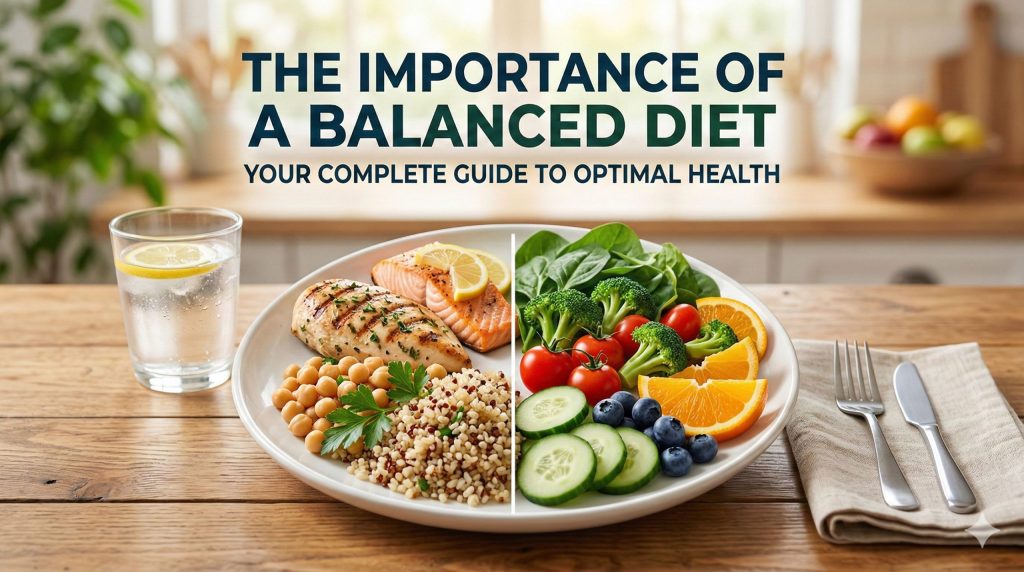
One of the most effective, science-backed visual tools for understanding this balance is the Plate Method, similar to the framework developed by nutrition experts at Harvard University. Instead of weighing your food, you simply divide your plate into sections:
- ½ Plate: Vegetables and Fruits: This section should be colorful and varied, providing the bulk of your daily dietary fiber, vitamins, and antioxidants.
- ¼ Plate: High-Quality Protein: This includes lean meats, poultry, fish, eggs, tofu, legumes, or beans.
- ¼ Plate: Complex Carbohydrates: Think whole grains like brown rice, quinoa, oats, or starchy vegetables like sweet potatoes.
This simple visual cue ensures you are getting a wide variety of nutrients at every meal, naturally controlling portions while maximizing nutritional value.
The Building Blocks: Macronutrients Explained
To fully grasp the importance of a balanced diet, we have to look closely at macronutrients. These are the nutrients our bodies require in large quantities to sustain life, provide energy, and build tissue.
1. Carbohydrates: The Primary Energy Source
Carbohydrates often get a bad reputation in diet culture, but they are essential. They are the body’s and the brain’s preferred source of energy. When digested, carbohydrates are broken down into glucose, which fuels cellular respiration. However, the type of carbohydrate matters immensely.
- Complex Carbohydrates: Found in whole grains, legumes, and starchy vegetables, these are packed with fiber. They digest slowly, providing a steady, sustained release of glucose into the bloodstream.
- Simple Carbohydrates: Found in refined sugars, white bread, and pastries, these are digested rapidly. They cause a quick spike in blood sugar followed by an inevitable crash, leaving you feeling fatigued and hungry shortly after eating. A balanced diet prioritizes complex carbs for long-lasting fuel.
2. Protein: The Architect of the Body
Proteins are crucial for physical growth, cellular repair, immune function, and the synthesis of essential enzymes and hormones. When you consume protein, your digestive system breaks it down into individual amino acids, which are then absorbed and used to build and repair muscle tissue, skin, hair, and nails.
- Complete vs. Incomplete Proteins: Animal sources (meat, dairy, eggs) provide “complete” proteins containing all nine essential amino acids that the human body cannot produce on its own. Plant sources (beans, lentils, nuts) are often “incomplete” (missing one or more essential amino acids). However, eating a varied combination of plant proteins throughout the day easily meets your essential amino acid requirements.
3. Dietary Fats: Essential for Function and Structure
Fats are a highly concentrated source of energy, providing 9 calories per gram compared to the 4 calories per gram provided by carbs and proteins. Structurally, dietary fats are composed of fatty acids and glycerol. These molecules are vital for protecting your internal organs, forming the lipid bilayer of cell membranes, regulating body temperature, and enabling the absorption of fat-soluble vitamins (A, D, E, and K).
- Healthy Fats (Unsaturated): Found in olive oil, avocados, nuts, seeds, and fatty fish like salmon. These support cardiovascular health, reduce systemic inflammation, and are structurally crucial for brain health.
- Fats to Limit (Saturated and Trans Fats): Found in deep-fried foods, processed meats, and commercial baked goods. Overconsumption of these can raise LDL cholesterol and negatively impact cardiovascular health.
Micronutrients: Small but Mighty Catalysts
While needed in much smaller quantities than macronutrients, vitamins and minerals are no less important. They do not provide direct energy (calories), but they act as the essential metabolic catalysts that allow your body to actually extract and utilize the energy from your food.
Vitamins
Vitamins are organic compounds required for normal cellular function, growth, and development.
- Water-Soluble Vitamins (B-complex, Vitamin C): These dissolve in water and are not stored in the body in large amounts, meaning they must be replenished daily through your diet. They are critical for energy metabolism, nervous system function, and immune defense.
- Fat-Soluble Vitamins (A, D, E, K): These require dietary fat to be absorbed in the digestive tract and are stored in the body’s liver and fatty tissues. They support everything from vision and bone mineralization to blood clotting and antioxidant protection.
Minerals
Minerals are inorganic elements essential for skeletal structure, fluid balance, and nerve transmission.
- Major Minerals: These include calcium (for bone density and muscle contractions), potassium (for regulating heartbeat and fluid balance), and magnesium (required for over 300 biochemical reactions in the body).
- Trace Minerals: Needed in tiny amounts, these include iron (crucial for forming hemoglobin to transport oxygen in the blood) and zinc (vital for immune function, DNA synthesis, and wound healing).
7 Proven Benefits of a Balanced Diet
When you consistently hit your macronutrient and micronutrient targets, the physiological benefits are profound. Here is why the importance of a balanced diet cannot be overstated:
1. Maximizes Energy and Daily Productivity
A balanced diet provides the body with a reliable, steady stream of fuel. Complex carbohydrates supply immediate, lasting energy for the brain and muscles. This stable energy translates to better focus, heightened mental alertness, and increased productivity at work and in daily life.
2. Promotes Sustainable Weight Management
Fad diets focus on extreme restriction, but a balanced diet focuses on nourishment. Meals rich in dietary fiber, lean protein, and healthy fats naturally promote satiety (the feeling of fullness). Fiber physically stretches the stomach and slows digestion, while protein suppresses ghrelin (the hunger hormone) and boosts peptide YY (a hormone that makes you feel full).
3. Fortifies the Immune System
Your immune system relies heavily on specific nutrients to function. Research indicates that Vitamin C, Vitamin D, zinc, selenium, and iron play critical roles in the production and function of immune cells and antibodies. A diet lacking in these nutrients leaves you highly vulnerable to infections.
4. Drastically Lowers Chronic Disease Risk
Perhaps the most critical aspect of the importance of a balanced diet is long-term disease prevention.
- Limiting refined sugars and prioritizing fiber drastically reduces the risk of developing insulin resistance and type 2 diabetes.
- Swapping saturated fats for healthy, unsaturated fatty acids lowers LDL (bad) cholesterol, protecting against atherosclerosis, heart disease, and stroke.
- A diet rich in potassium and low in excess sodium helps maintain healthy blood pressure levels.
5. Supports Optimal Gut Health and Digestion
The human gut microbiome—the trillions of bacteria living in your digestive tract—plays a massive role in overall health, influencing everything from digestion to immunity and even mood. A healthy, diverse gut microbiome ensures smooth digestion, prevents constipation, and reduces systemic inflammation throughout the body.
6. Enhances Mood and Cognitive Function
There is a direct communication pathway between your gut and your brain, known as the gut-brain axis. Nutritional psychiatry has shown that what you eat directly affects the production of neurotransmitters like serotonin and dopamine, which regulate mood. Furthermore, Omega-3 fatty acids (found in walnuts, chia seeds, and fatty fish) are structurally vital for brain cell membranes, improving memory, cognitive function, and lowering the risk of neurodegenerative decline.
7. Cultivates Radiant Skin, Hair, and Nails
The external condition of your skin and hair is often a direct reflection of your internal nutrition. Proteins provide the building blocks (amino acids) required to synthesize collagen and keratin. Vitamin C is a necessary cofactor for collagen production. Vitamin E and healthy fats maintain skin hydration and elasticity, while zinc prevents acne and promotes tissue healing.
Signs Your Diet May Be Out of Balance
How do you know if you need to make a change? Your body is incredibly communicative and will usually send warning signals when it is lacking essential nutrients. Look out for these signs:
- Chronic fatigue, lethargy, or an inability to wake up feeling rested.
- Intense, frequent cravings for sugary, starchy, or salty foods.
- Brain fog, poor memory recall, or difficulty concentrating on tasks.
- Unexplained mood swings, irritability, or heightened anxiety.
- Frequent digestive distress, including bloating, gas, acid reflux, or constipation.
- Physical signs like dull skin, thinning hair, or weak, brittle nails.
- A weakened immune system, resulting in catching colds frequently or taking longer to heal from minor scrapes.
Your 10-Day Actionable Plan to Eating Better
Transitioning to a balanced lifestyle does not happen overnight. It requires small, sustainable changes that compound over time. Use this 10-day roadmap to kickstart your journey toward optimal health:
- Day 1: Prioritize Hydration. Aim for at least 2.5 to 3 liters of water today. Carry a reusable bottle with you everywhere.
- Day 2: Audit Your Plate. Implement the Plate Method for dinner tonight (half vegetables, quarter lean protein, quarter complex carbs).
- Day 3: The Fiber Boost. Add one serving of dark, leafy greens and one piece of whole fruit to your day.
- Day 4: Upgrade Your Protein. Ensure you have a solid source of high-quality protein (eggs, Greek yogurt, chicken, tofu) at every single meal.
- Day 5: Snack Smart. Swap out chips or pastries for a handful of unsalted nuts, seeds, or apple slices with natural peanut butter.
- Day 6: Focus on Healthy Fats. Incorporate half an avocado, a drizzle of extra-virgin olive oil, or a serving of fatty fish into your meals.
- Day 7: Whole Grain Swap. Replace all white rice, white bread, or regular pasta with nutrient-dense brown rice, whole wheat bread, or quinoa.
- Day 8: Cook at Home. Commit to preparing all three of your meals at home today to easily control sodium and hidden sugar intake.
- Day 9: Optimize Digestion. Aim to finish your last meal 2 to 3 hours before you go to sleep. This allows your digestive system to rest and significantly improves sleep quality.
- Day 10: Reflect and Adjust. Look back on how your energy levels, mental clarity, and digestion have improved, and identify which of these new habits you will maintain permanently.
Frequently Asked Questions (FAQ)
- What is the easiest way to ensure I am eating a balanced diet?
Ans: The simplest method is visual. Use the Plate Method: fill half your plate with colorful vegetables, one-quarter with lean protein, and one-quarter with complex carbohydrates. This naturally balances your macronutrients without the stress of counting calories.
- Can understanding the importance of a balanced diet help with weight loss?
Ans: Absolutely. A balanced diet naturally regulates your appetite. By consuming adequate protein and fiber-rich carbohydrates, you stabilize your blood sugar and hunger hormones, leading to highly sustainable weight loss.
- Are carbohydrates bad for my health?
Ans: No, carbohydrates are vital for brain and muscle function. The confusion lies in the type. You should minimize refined, simple carbohydrates (sugars, white flour) and maximize complex carbohydrates (oats, sweet potatoes, legumes), which provide essential fiber and sustained energy.
- How much water should I drink as part of a balanced diet?
Ans: While individual needs vary based on climate and physical activity level, a general medical guideline is to aim for about 2.7 liters (for women) to 3.7 liters (for men) of total water daily from all beverages and moisture-rich foods.
- What happens if I continually ignore my nutritional needs?
Ans: Ignoring the importance of a balanced diet can lead to immediate short-term issues such as lethargy, brain fog, and poor digestion. Over time, it leads to severe long-term consequences, including a drastically increased risk of obesity, cardiovascular disease, osteoporosis, and type 2 diabetes.
Conclusion
A balanced diet is not a temporary phase or a restrictive punishment; it is the ultimate form of self-care. By deeply understanding the roles of macronutrients and micronutrients, and making conscious, educated choices about what goes on your plate, you are actively investing in a longer, healthier, and more vibrant life.



122 Responses
https://shorturl.fm/Opq7p
Thank u for your comment
https://shorturl.fm/9Dfnz
Thank you for your comment
Hey I know this is off topic but I was wondering if you knew of any widgets I could add to my blog that automatically tweet my newest twitter updates. I’ve been looking for a plug-in like this for quite some time and was hoping maybe you would have some experience with something like this. Please let me know if you run into anything. I truly enjoy reading your blog and I look forward to your new updates.
new online casino slot games bad
Thank u for your comment.
you are in reality a just right webmaster. The web site loading speed is incredible. It kind of feels that you are doing any unique trick. Also, The contents are masterpiece. you have done a great process on this subject!
best real money online casino slots
Thank u so much for your valuable comment.
This was a very valuable read, and I am glad I took a few minutes out of my schedule to go through it carefully, as the points you laid out are incredibly relevant and presented in a very well-organized, easy-to-follow sequence.
fastest withdrawal online casino canada
Thank u for your comment
It is quite helpful to have a resource like this available when trying to wrap your head around the subject, and I am grateful for the time you took to lay out all these details in such a well-organized and structured fashion.
casino en ligne
Thank u for your comment
steam desktop authenticator Защитите свой цифровой профиль прямо сегодня, ведь для этого достаточно скачать Steam Desktop Authenticator с официального репозитория разработчиков. Приложение избавит вас от рутины при обмене вещами и подтверждении торговых ордеров на площадке. Введите в строке браузера download Steam Desktop Authenticator или просто download sda, чтобы обезопасить свои данные раз и навсегда.
I just wanted to drop a quick note to express my appreciation for this excellent piece of writing. The well-organized formatting and balanced perspective you maintained throughout the entire text make it an absolutely fantastic starting point for anyone looking to learn more right now.
casino en ligne avec retrait instantane
Thank u for your comment.
What stands out to me the most is how this post stays useful without becoming too difficult or difficult to read, because the calm tone and well-organized structure make the whole discussion feel more natural and pleasant for different audiences.
Ебля с конем
Thank u for your comment
I just wanted to drop a quick note to say how much I appreciated this article. It covers all the essential details in a very clear sequence, making it incredibly simple for anyone to grasp the core concepts without feeling overwhelmed by the text.
Всё для дома
Thank u for your comment.
I appreciate the way this post presents its ideas so smoothly and in a clear way, since the discussion remains enjoyable throughout while still giving readers enough space to form and share their own perspectives respectfully.
Шубы в стамбуле
Thank u for your comment.
Reading through this comprehensive summary was a great use of my time today. The layout is neat, the tone is perfectly objective, and the overall reading experience is excellent, which makes this page something I will definitely be saving for future reference and review.
lista casinos cuenta rut
Thank u for your comment.
The overall tone of this post feels relaxed and insightful at the same time, which helps create a pleasant and engaging reading experience for different audiences.
在线购买无处方安定片 xxx Pornhub
Thank u for your comment.
Thank u for your comment.
I like how this post keeps the discussion clear, well-considered, and engaging from beginning to end for readers online.
在线购买无处方安定片 xxx Pornhub
The formatting and overall presentation of this post are absolutely excellent, making it a breeze to read through and ensuring that the most critical pieces of information stand out clearly without feeling overly difficult to process.
casinos con pesos chilenos
The way this post is written makes the whole discussion feel very easygoing and clear, while also keeping enough depth in the topic to make readers interested in sharing their own opinions and continuing the conversation further.
Casinos online que pagan
I appreciate how this post creates a easygoing and positive atmosphere for discussion, since the tone feels friendly and open while the ideas themselves are presented clearly and in a well structured manner throughout.
Watch sexual porno video xxx sex adults site
I just wanted to leave a quick note to say how valuable this overview is. The well-organized structure and completely objective perspective provide a really solid foundation for understanding the topic.
adult xxx video porn site xxx sex video
This article provided exactly the kind of direct information I was hoping to find today. Your objective breakdown of the facts makes the whole subject highly accessible.
在线购买大麻用于XXX成人色情视频
The way this post is written makes the whole discussion feel very smooth and simple to understand, while also keeping enough substance in the topic to make readers interested in sharing their own opinions and continuing the conversation further.
adult xxx video porn site xxx sex video
Having read a few different perspectives recently, I can confidently say that your methodical approach to presenting this data makes it one of the most valuable and balanced pieces I have encountered so far.
Xxx video onlyfans sex video site
I enjoy how this post stays informative while also maintaining a conversational style that feels natural and enjoyable overall.
Watch kids sexual porno video xxx sex
Your ability to synthesize this information into such a cohesive narrative is highly commendable, and I feel much more informed now having read your thoughts than I did before clicking on your carefully written article.
Watch kids sexual porno video xxx sex
One thing I really like here is how smoothly the information is presented, since the post manages to stay insightful, pleasant to read, and clear at the same time, which is not always easy to achieve in online discussions these days.
Watch kids sexual porno video xxx sex
детские франшизы начал бизнес продаже
I really enjoy the way this post presents the topic in such a balanced and clear manner, because it keeps the discussion interesting without feeling overwhelming, while also making it easy for different readers to understand and connect with the overall message.
kids sexual xxx porn onlyfans
I was just looking for some fresh perspectives on this matter, and I have to say that the way you structured this information makes it incredibly simple to follow and follow along from start to finish.
japan porn
I like how this post encourages discussion in such a smooth and thoughtful way, since the ideas are presented with clarity and the overall tone makes it easier for readers to share their own perspectives thoughtfully and thoughtfully.
children xxx video porn site xxx sex video
HairNeva is a leading Istanbul-based hair restoration clinic focused on FUE, DHI, Sapphire FUE, unshaven hair transplants, beard restoration, and advanced regenerative therapies. Led by European Board-certified plastic surgeon Assoc. Prof. Dr. Guncel Ozturk, the clinic brings together customized treatment plans, AI-powered hair analysis, all-inclusive medical tourism packages, and long-term aftercare. HairNeva emphasizes natural outcomes, doctor-led treatments, patient satisfaction, and comprehensive support for international patients.
hair transplant istanbul
купить справки спб
I appreciate how smoothly this post explains the topic without making the discussion feel too difficult, since the overall tone remains accessible, informative, and comfortable for a wide range of readers to engage with online.
casino acceptant neosurf
There are a lot of different ways to approach this kind of topic, but the direction you chose to take makes the information feel very approachable, which is something I always look for when browsing through articles online.
Xxx video onlyfans sex video site
I am very glad I found this page, as the information provided here is exactly what I was searching for. It is a highly clear, universally applicable summary that perfectly balances detail and clear explanation without leaning toward any specific bias.
https://catechistaduepuntozero.it/
кредит под залог недвижимости рефинансирование ипотеки
фирмы выставочных стендов заказать стенд на выставку
This post creates a very interesting discussion because the ideas are presented in a simple and fair way, making the content enjoyable to read while also encouraging readers to share their own perspectives and interpretations thoughtfully.
kinghills casino
https://bmlpro.ru/
Thank you for putting together such a nicely arranged and carefully written piece of content; the way you have structured the information makes it incredibly clear to follow and ensures that the main message is communicated highly effectively.
retrait visa casino
Really helpful write-up, thanks for putting this together.
自製的黑色同性戀色情片
https://browart.ru/services/
萊利·梅·劉易斯 色情
doxycycline dosage chlamydia
https://greenwsz.net
ruslan angelo porn
Snapchat 上的色情內容
https://bs2web9.at
j2badd porn
penis look after taking viagra
viagra generic online
cory chase porn
https://greenwsz.net
buy cialis online 1
penis enlargement possible?
https://bs2sait.gl
brother sister viagra
https://tripskan77.at
viagra 48 hours
black gay porn sex video – trans lesbian porn says:
doxycycline-hyclate uses
viagra strengths
buy viagra connect near me
https://spiritains-jeunes.fr/pgs/Meilleur_Code_Promo_1xBet_Afrique.html
https://therockpit.net/wp-content/pages/melbet_free_promo_code_enter__.html
порно красиво
промокоды 1хбет Вводите действующий купон на https://bergkompressor.ru/news/artcles/?1xbet_promokod_pri_registracii_bonus_5.html и активируйте бонус 100% на депозит, чтобы получить стартовый капитал для игры.
viagra connect for sale
It is always a pleasant surprise to find an article that delivers exactly what it promises. Your neutral breakdown of the facts is both valuable and incredibly useful, providing a highly strong foundation of knowledge for anyone who wants to dive deeper into this subject.
dog video
tommie lee porn
forced lesbian sex porn
厚侏儒色情
https://doc.adminforge.de/s/bhQWRKnA9k
порно с японкой
снять жилье посуточно в паттайя снять жилье посуточно в паттайя
免費的色情明星色情片
снять жилье посуточно в паттайя снять апартаменты паттайя
аренда апартаментов паттайя снять жилье посуточно в паттайя
https://t.me/hudushin_seo Как зарабатывать больше в фитнес-бизнесе без лишних затрат. Реальные кейсы: CRM, автоматизация продаж, ИИ-инструменты, управление командой. Делюсь тем, что работает в Zaruba Fitness
пакеты для кофе Дой пак с зип-замком обеспечивает многократное открытие и закрытие, что очень удобно для повседневного использования конечным потребителем. Предложите своим клиентам комфорт высокого уровня.
плёнка Спектрол Премиум Современная полиуретановая пленка spectroll — это надежный щит для вашего авто. Она эффективно поглощает удары от камней.
I was really happy to come across this post today. The way you presented the information is incredibly clear and objective, providing a solid foundation for anyone interested.
Este site engana os seus utilizadores
There is a lot of noise on the internet these days, so finding a carefully organized and clear piece of writing like this one is something I always try to acknowledge with a quick positive note.
在线购买无处方安定片 xxx Porn
https://ledigital.com/wp-content/
https://t.me/KohLantaKrabiThailand ко ланта
https://www.gilmaire-etienne.com/
This post creates a very active discussion because the ideas are presented in a clear and well-rounded way that makes the content interesting and simple for different readers to follow online.
在线购买他达拉非片用于肛交XXX色情
doxycycline to treat strep
NVMe VPS HSTQ
как вернуть страсть Психология брака исследует, как переход к формальным обязательствам меняет динамику пары и какие опасности это несет. Осознанный подход к браку помогает сохранить страсть и уважение даже после многих лет совместной жизни.
https://pl.porno-sex-chat.com/
https://kz.seintcams.com/
I enjoy how this post combines simplicity and meaning in a way that keeps the discussion enjoyable, easy to follow, and open enough for readers with different viewpoints to participate comfortably in the conversation.
https://fyrleyfoodbar.nl/
I appreciate how this post stays informative without feeling too heavy, because the ideas are presented in a straightforward and easy-to-follow way.
https://kookworkshopbreda.nl/
Thank you for putting together such a nicely arranged and meaningful piece of content; the way you have structured the information makes it incredibly clear to follow and ensures that the main message is communicated highly effectively.
https://beregoedkinderkleding.nl/
https://id.pinterest.com/pin/1104507877401211555
отель на час римская Нужен качественный отель на час Римская для кратковременного отдыха? Мы предоставляем приватные номера с почасовой оплатой по доступным ценам.
гостиница площадь ильича Комфортабельная гостиница Площадь Ильича ждет вас с распростертыми объятиями. Наши номера — это гарантия вашего спокойного сна.
Thank you for compiling these essential points into such an easy-to-digest format. The methodical layout combined with your completely objective perspective results in an outstanding piece of writing that genuinely helps the audience understand the broader context of the situation.
https://win.info.pl/
порно чат пар
I appreciate how this post stays well explained and interesting without trying to overcomplicate the subject, because that kind of approachable and easygoing style usually creates much more meaningful and respectful discussions between different readers online.
casino en ligne fiable
It is quite valuable to have a resource like this available when trying to wrap your head around the subject, and I am grateful for the time you took to lay out all these details in such a clear and orderly fashion.
adult xxx video porn site xxx sex video
maorou k8m maorou_k8m
liv wild porn
This post does a nice job of keeping the content clear, organized, and interesting without feeling too overwhelming.
https://comparenergiezuinig.nl/
czech porn casting
This post has a easy flow that keeps the content engaging while also making the discussion simple and easy to understand.
https://comparebarbecue.nl/
промокод 1хбет Активируйте промокод на https://lumber-jack.ru/wp-content/news/5seks_video_chat_onlayn_dlya_zghenshin.html и получите бонус 100% на первый депозит при регистрации для максимального старта.