
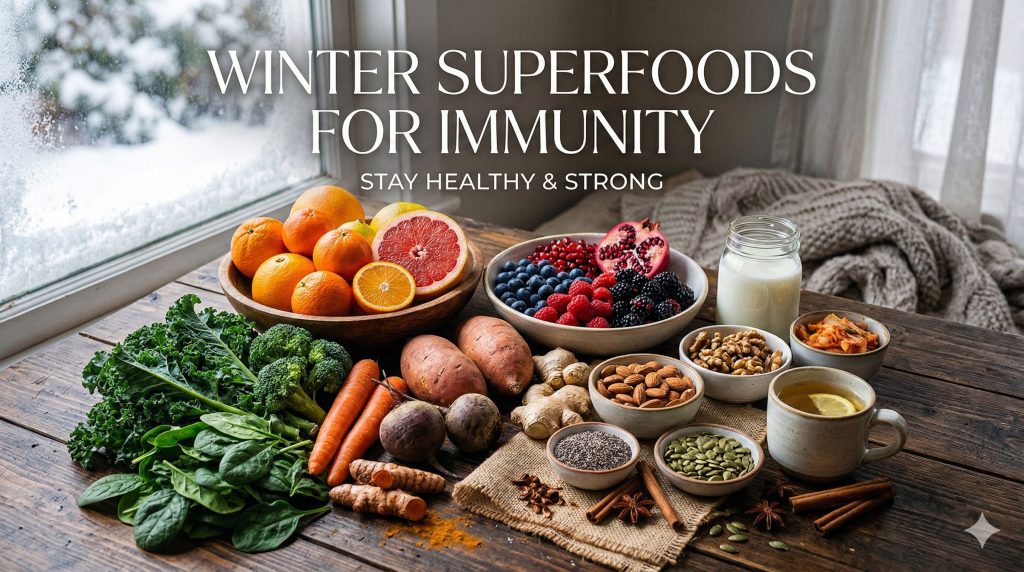
As the mercury drops and the days grow shorter, our bodies undergo a physiological shift. We often feel more lethargic, our skin becomes drier, and we seem more susceptible to every “bug” going around the office or school. This isn’t just a coincidence—it is a result of environmental stressors meeting nutritional gaps.
To combat this, focusing on winter superfoods for immunity is not just a health trend; it is a biological necessity. In this comprehensive guide, we will explore the science of seasonal immunity and provide a deep dive into the foods that will keep you resilient until spring.
Part 1: Why Does Our Immunity Dip in Winter?
Before we look at the plate, we must understand the “why.” Most people believe the cold weather itself causes the common cold. However, viruses cause illnesses—the cold weather simply creates the environment for them to thrive.
1. The Humidity Factor
Cold air holds less moisture than warm air. When we turn on indoor heating, the air becomes incredibly dry. This dries out the mucosal linings in our nasal passages. These linings act as the “frontline soldiers” of the immune system, trapping viruses before they enter the lungs. When they are dry, their effectiveness drops significantly.
2. The Vitamin D “Gap.”
During winter, the sun sits lower in the sky, and UV-B rays (the ones responsible for Vitamin D synthesis in our skin) are often too weak to be effective. Vitamin D is actually a hormone that regulates the T-cells and macrophages of the immune system. According to the Harvard T.H. Chan School of Public Health, Vitamin D deficiency is a leading factor in seasonal respiratory infections.
3. Reduced Physical Activity
Cold weather keeps us indoors. Reduced movement means slower lymphatic drainage. Since the lymphatic system relies on muscle movement to circulate immune cells, staying sedentary can literally “slow down” your immune response.
Part 2: Top Winter Superfoods for Immunity
To rank as a “superfood,” a food must be exceptionally nutrient-dense. Here is a breakdown of the categories you should prioritize.
1. Citrus: The Vitamin C Revolution
While Vitamin C is the most famous immune booster, most people don’t consume enough of it to make a difference during an active infection.
- The Science: Vitamin C (ascorbic acid) supports various cellular functions of both the innate and adaptive immune systems. It accumulates in phagocytic cells, such as neutrophils, and can enhance chemotaxis (the movement of cells to an infection site).
- Beyond Oranges: Don’t just stick to oranges. Red Bell Peppers actually contain nearly three times as much Vitamin C as an orange. Kiwi is another powerhouse that provides a significant dose of Vitamin E as well.
- The Bioavailability Tip: Vitamin C is heat-sensitive. To get the most out of your winter superfoods for immunity, eat your citrus raw or add lemon juice to your tea only after it has cooled down slightly.
2. Root Vegetables: The Earth’s Protection
Root vegetables are nature’s “storage units,” holding complex carbohydrates and fat-soluble vitamins.
- Sweet Potatoes & Carrots: These are rich in Beta-Carotene. The body converts this into Vitamin A, which is the “anti-infective” vitamin. It maintains the integrity of the skin and the linings of the gut and lungs.
- Beetroots: Beets contain nitrates that improve blood flow. Better circulation means your immune cells can travel faster to where they are needed.
- Practical Use: Instead of boiling these (which leaches nutrients into the water), roast them with a healthy fat like avocado oil or ghee to ensure the Vitamin A is absorbed by your body.
3. Alliums: Garlic and Onions
These aren’t just for flavor; they are potent medicinal foods.
- Allicin: When you crush or chop garlic, a compound called alliin turns into allicin. This is a powerful antimicrobial and antifungal agent.
- The “10-Minute Rule”: Science shows that you should let chopped garlic sit for 10 minutes before cooking it. This allows the enzymatic reaction that creates allicin to reach its peak. If you throw it straight into a hot pan, the enzymes are deactivated by the heat before they can work.
4. Leafy Greens and Brassicas
In the world of winter superfoods for immunity, greens like Kale, Spinach, and Broccoli are the heavy lifters.
- Sulforaphane: Found in broccoli and Brussels sprouts, this compound triggers antioxidant enzymes in the body.
- Folate: Spinach is high in folate, which is necessary for the production of new cells, including the white blood cells that fight infection.
- Cooking Tip: Lightly steam your greens rather than boiling them. This preserves the Vitamin C and B vitamins that are otherwise lost in the water.
Part 3: The Gut-Lung Axis – Fermented Foods
As a nutrition student, you likely know that 70-80% of the immune system lives in the gut. There is a direct communication pathway known as the “Gut-Lung Axis.”
- Probiotics: Foods like Kimchi, Sauerkraut, and Kefir introduce beneficial bacteria. These bacteria prime the immune system to recognize “self” from “invader,” reducing the risk of autoimmune responses and increasing the speed of the attack on pathogens.
- Prebiotics: To keep those “good bugs” alive, you must feed them fiber. Leeks, onions, and bananas are excellent winter prebiotics.
- Recommendation: Aim for one serving of fermented food per day. If you find sauerkraut too sour, try adding it to a sandwich or mixing it into a salad.
Part 4: Healthy Fats, Nuts, and Seeds
Immune cells have a fatty outer membrane. If you don’t eat enough healthy fats, these membranes become “leaky” or inefficient.
- Walnuts: These are a top source of Alpha-linolenic acid (ALA), a plant-based Omega-3. Omega-3s help control the “cytokine storm” or excessive inflammation that can occur when you are sick.
- Pumpkin Seeds: These are a “zinc mine.” Zinc is critical for the production of new immune system cells. Even a mild zinc deficiency can make you more vulnerable to the flu.
- Vitamin E: Found in sunflower seeds and almonds, this is a fat-soluble antioxidant that protects the integrity of cell membranes during an “oxidative stress” event (like fighting a virus).
Part 5: The Power of Warming Liquids
In winter, we often forget to drink water because we don’t feel “hot.” However, hydration is what allows the kidneys to flush out toxins.
1. Bone Broth or Vegetable Stock
Broths are rich in minerals and amino acids like Glutamine, which helps “seal” the gut lining. The warmth also stimulates the cilia (tiny hairs) in the nose to move faster, helping to clear out mucus.
2. Herbal Teas
- Ginger Tea: Ginger is a “thermogenic” food—it literally helps warm the body from the inside out. It is also a powerful anti-nausea and anti-inflammatory agent.
- Green Tea: Contains EGCG (Epigallocatechin gallate), a polyphenol that has been shown to inhibit the growth of bacteria and certain viruses.
Part 6: Designing Your Winter Immunity Meal Plan
To make these winter superfoods for immunity work, consistency is key. Here is a sample day of “Immune-Shielding” eating:
- Breakfast: Steel-cut oats topped with walnuts, flaxseeds, and a handful of blueberries (antioxidants).
- Lunch: A warm lentil soup with kale, garlic, and turmeric, served with a side of sourdough bread (prebiotics).
- Snack: A sliced orange or a handful of pumpkin seeds.
- Dinner: Roasted salmon (Vitamin D and Omega-3) with sweet potatoes and steamed broccoli.
- Evening Drink: Fresh ginger and lemon tea with a tiny bit of raw honey.
Part 7: Lifestyle Factors That Support Nutrition
Even the best diet cannot overcome a lack of sleep. When we sleep, the immune system releases proteins called cytokines. If you are sleep-deprived, your production of these protective proteins drops.
- Sleep: Aim for 7–9 hours.
- Stress Management: High cortisol (the stress hormone) actively suppresses the immune system. Try 5 minutes of deep breathing or a short walk in the winter sun.
- Exercise: Moderate exercise (not high-intensity when you’re feeling run down) improves the circulation of white blood cells.
Frequently Asked Questions (FAQ)
1. Are supplements better than winter superfoods for immunity?
Ans: While supplements like Vitamin D3 and Zinc can be helpful, whole foods offer a “complex” of nutrients that work together. For example, the fiber in a whole orange helps regulate the absorption of sugar and Vitamin C, which a supplement cannot do. Consult the National Institutes of Health (NIH) for specific supplement guidelines.
2. Can I eat too many “superfoods”?
Ans: Balance is key. For instance, too much Zinc can interfere with copper absorption. It is best to get your nutrients from a diverse range of whole foods.
3. Does cooking destroy the nutrients?
Ans: Some, yes. Vitamin C and B vitamins are water-soluble and heat-sensitive. However, Vitamin A and K are often more bioavailable when cooked with a little fat. A mix of raw and cooked foods is the best strategy.
4. Is honey good for immunity?
Ans: Raw, local honey has antibacterial properties and can soothe a sore throat. However, it is still a sugar, so use it sparingly.
Conclusion: Your Winter Shield
Building a strong immune system isn’t about one “miracle” food; it’s about a synergy of winter superfoods for immunity, proper hydration, and sustainable lifestyle habits. By filling your plate with the vibrant colors of citrus, the deep oranges of root vegetables, and the rich greens of the brassica family, you are giving your body the essential tools it needs to thrive in the cold rather than just survive it.
Remember, targeted seasonal nutrition works best when built upon a solid foundation of year-round healthy eating. To understand how these winter choices fit into your broader nutritional goals, check out our deep dive into The Importance of a Balanced Diet: Your Complete Guide to Optimal Health.
Start incorporating these superfoods today, and your body will thank you when the flu season hits its peak. Your kitchen truly is your best defense.




4 Responses
https://shorturl.fm/5KBUJ
Thank u for your comment
https://shorturl.fm/Plx79
Thank you for your comment